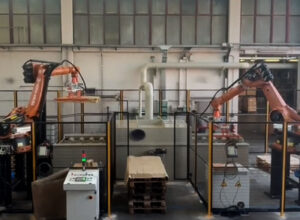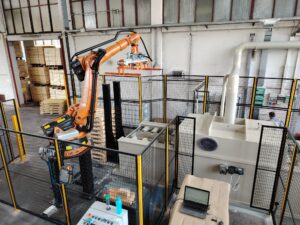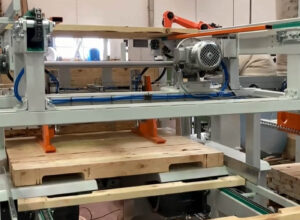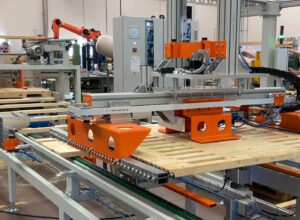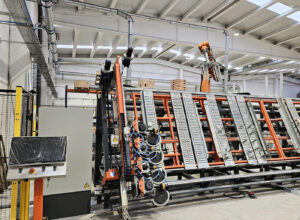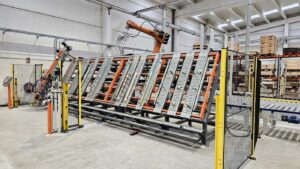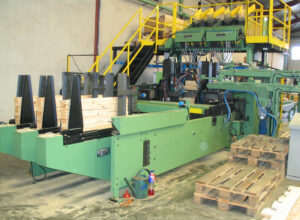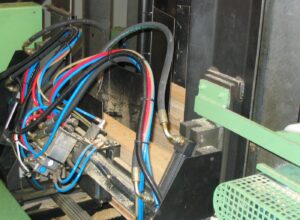
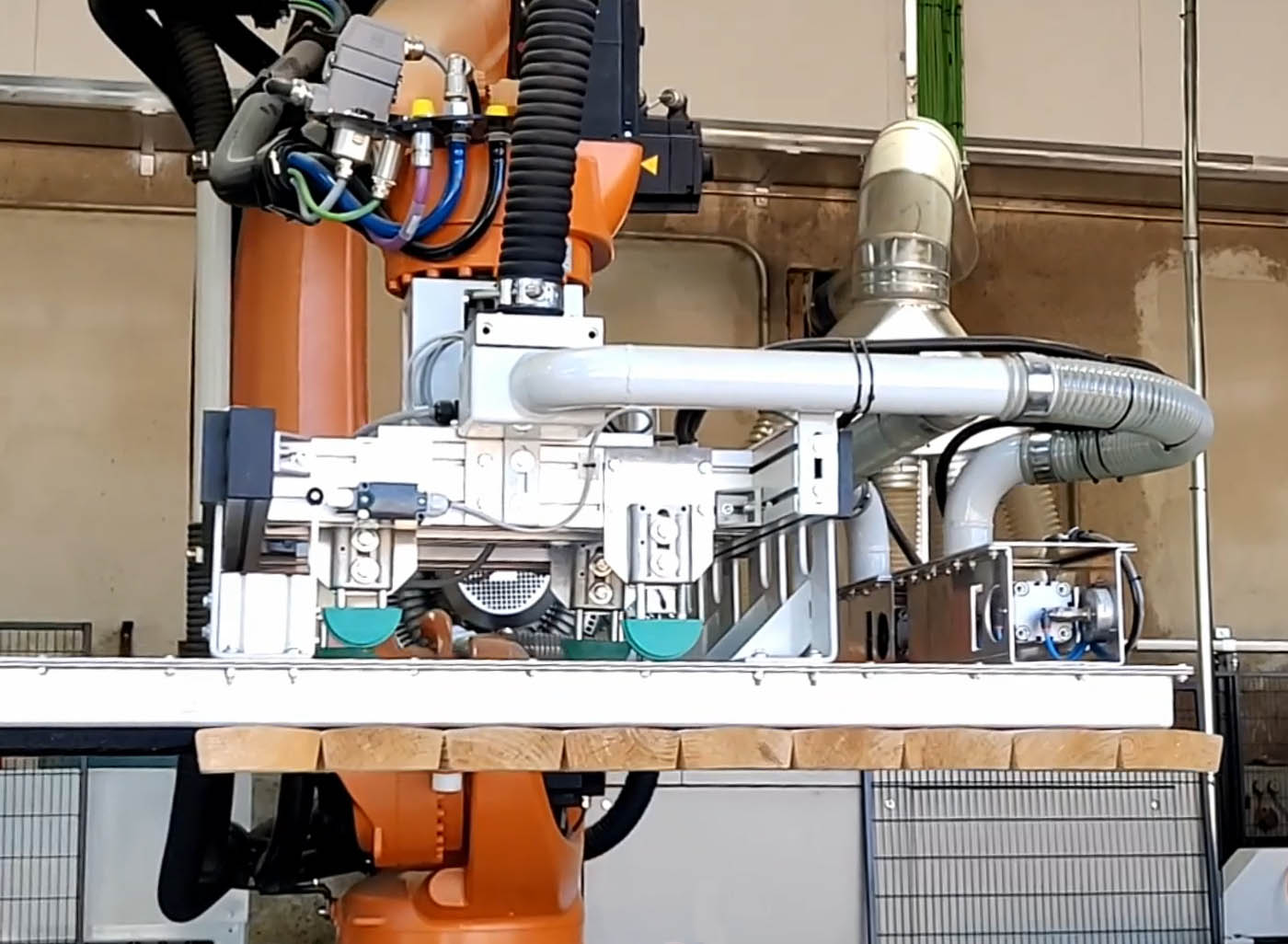
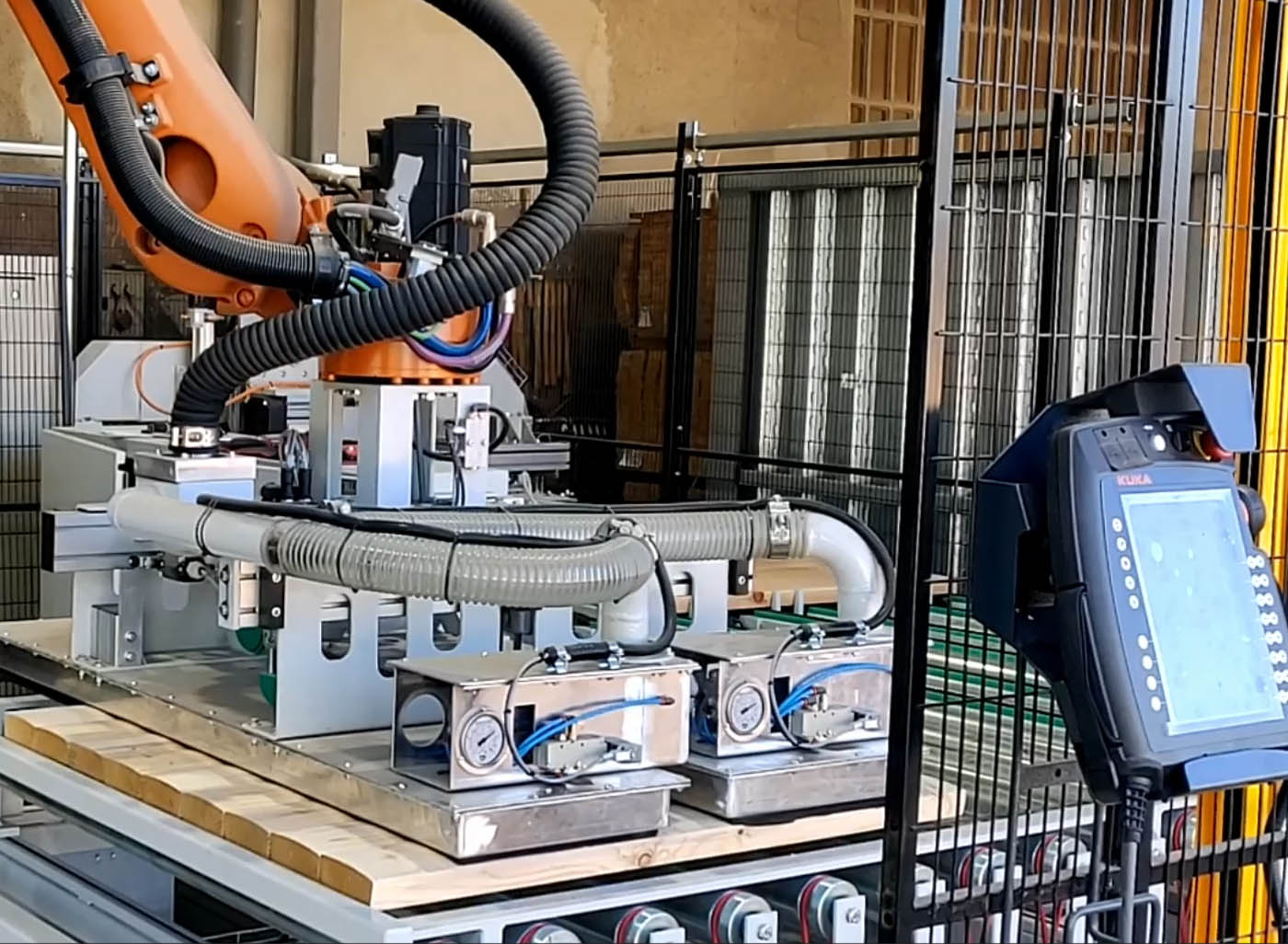
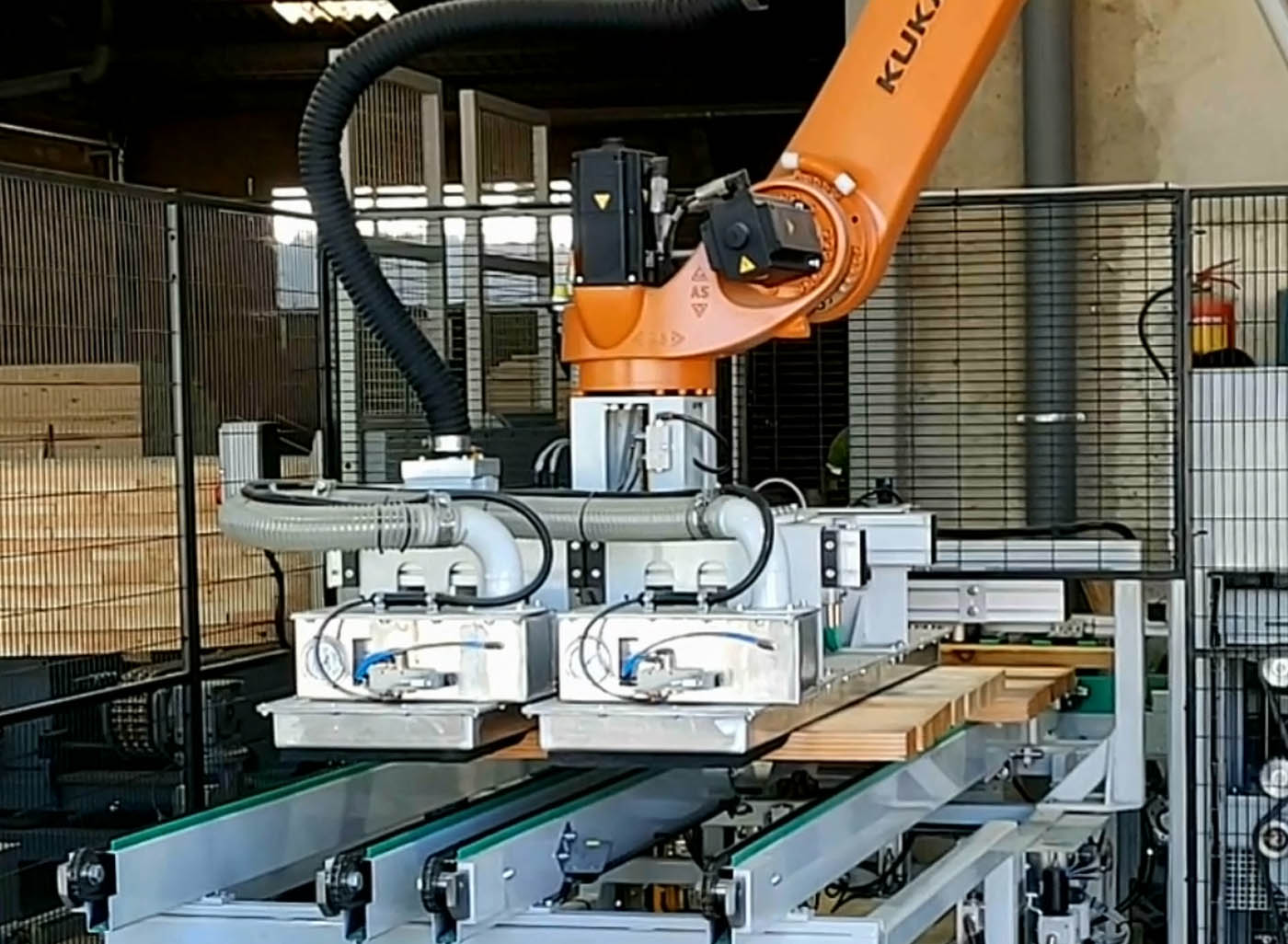
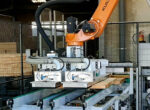
The robotic feeder and stacker arm from Global Wood Machines automates both the infeed and the outfeed of a molder machine in a single cell. By using one robotic feeder and stacker arm to load the molder and to perform the stacking maneuvers, manufacturers avoid the cost and complexity of installing separate automatic handling systems.
What the robotic feeder and stacker arm does
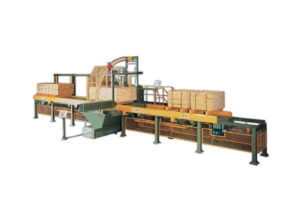
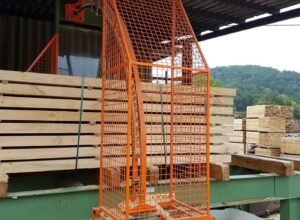
In a typical configuration the cell consists of a customized input table, an outcome table and the robotic arm itself. The arm picks raw boards or tables from the input table, feeds them into the molder, and then collects the finished components at the outfeed to build them into a stable package. Because one unit performs both jobs, the molder station runs continuously without an operator handling material by hand.
The robotic feeder and stacker arm can stack components in a cross-layer pattern, alternating the orientation of each layer to improve the stability of the finished package — important for parts that will be transported or stored before the next process.
Key features
- Single robotic arm handles both feeding and stacking
- Customized input and outcome tables matched to your material
- Cross-layer stacking for stable, transport-ready packages
- Removes manual handling around the molder station
- Adaptable to any line that feeds or stacks wood boards or tables
A flexible automation building block
Although this cell is shown serving a molder machine, the robotic feeder and stacker arm is a flexible automation building block. The same concept applies to any process that requires boards or tables to be fed in and stacked out — planing, profiling, cutting or sorting. That makes it a low-risk first step for manufacturers who want to introduce robotics gradually rather than committing to a full automated line at once.
Return on investment and safety
Feeding a molder by hand is one of the most repetitive jobs in a wood plant, and it is increasingly difficult to staff. A robotic feeder and stacker arm runs the station through breaks and shift changes at a constant rhythm, which raises effective output and makes production predictable. It also removes the operator from the immediate area of a fast-moving molder, reducing the risk of hand and finger injuries. Between the labour saving, the higher utilisation of the molder and the improved safety record, most installations reach payback well inside the working life of the robot.
Engineered around your process
Every robotic feeder and stacker arm is engineered around the specific molder, board dimensions and throughput of the customer. Global Wood Machines, working with automation specialist Joutech — an official KUKA system partner with more than 120 robots installed — designs the cell layout, selects the robot and programs the handling and stacking patterns. Format changes are handled through stored programs, so adding a new board size later does not require re-engineering the cell.
Integration and worldwide supply
The cell integrates with wider automation projects such as a saw disc crosscut station or a pallet top deck feeder. We coordinate installation, commissioning and operator training across the USA, Canada, Australia, Europe and the Middle East.
From a single cell to a full automated line
Many manufacturers are cautious about automation because they picture a large, all-or-nothing project. A robotic feeder and stacker arm is the opposite of that: it is a single, self-contained cell that automates one station and proves the concept in your own plant. Once the cell is running and the team is comfortable with it, the same robotics platform and the same supplier can extend automation to the next bottleneck. Global Wood Machines and Joutech plan installations with that growth path in mind, so an early single-cell investment becomes the first stage of a wider automated line rather than an isolated purchase.
For a layout and quotation matched to your molder and production target, contact our technical team.