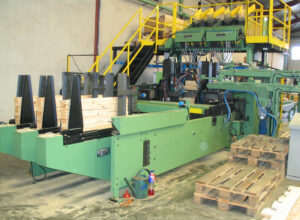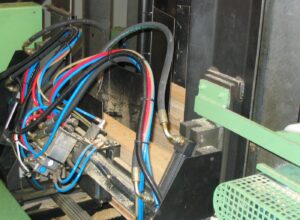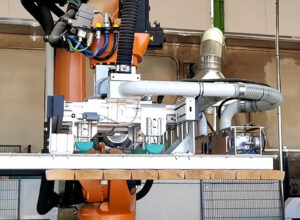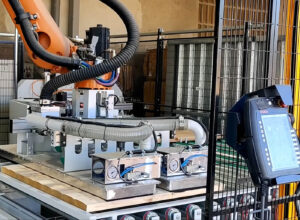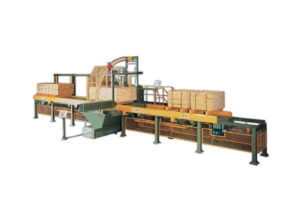
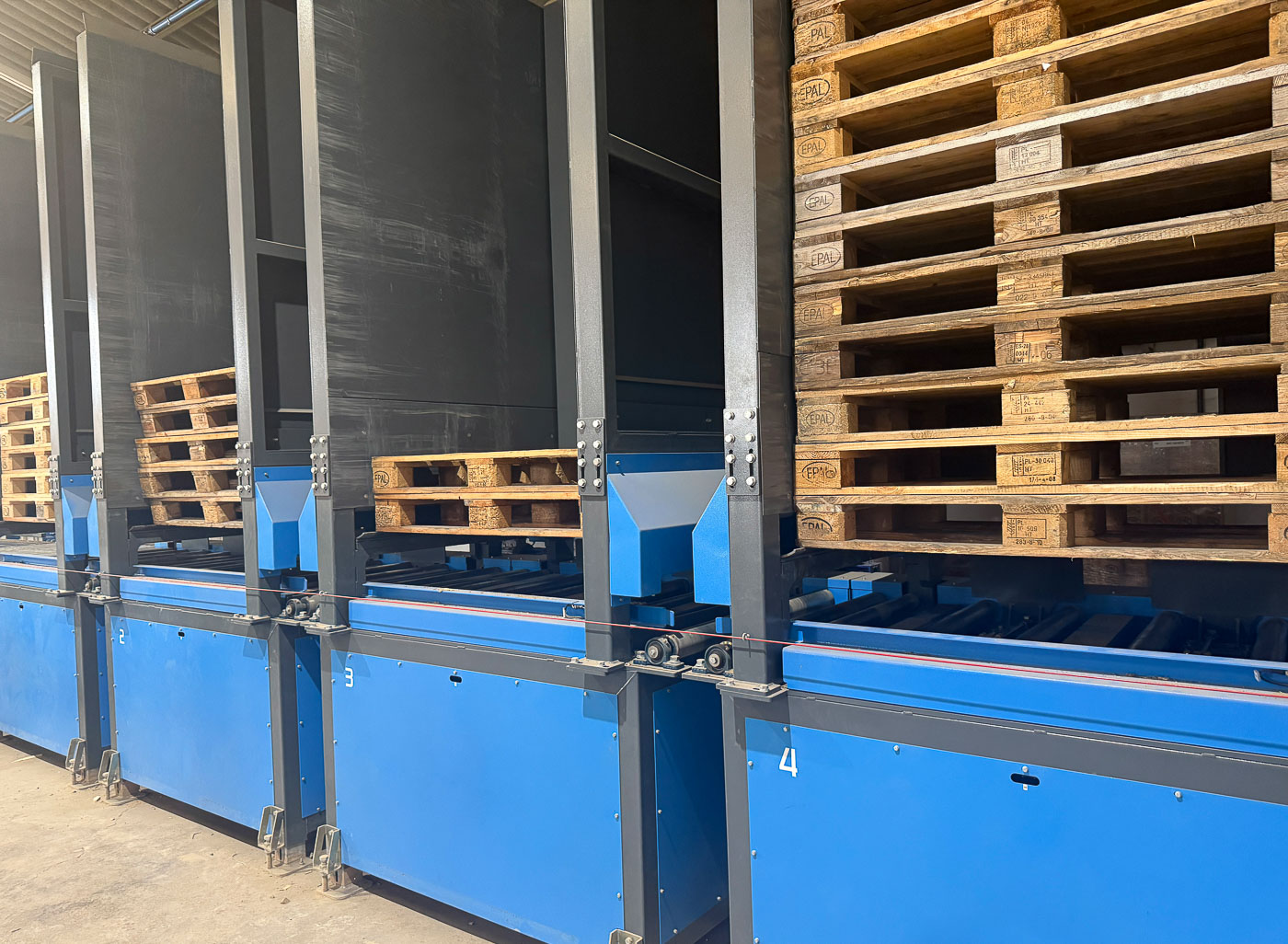
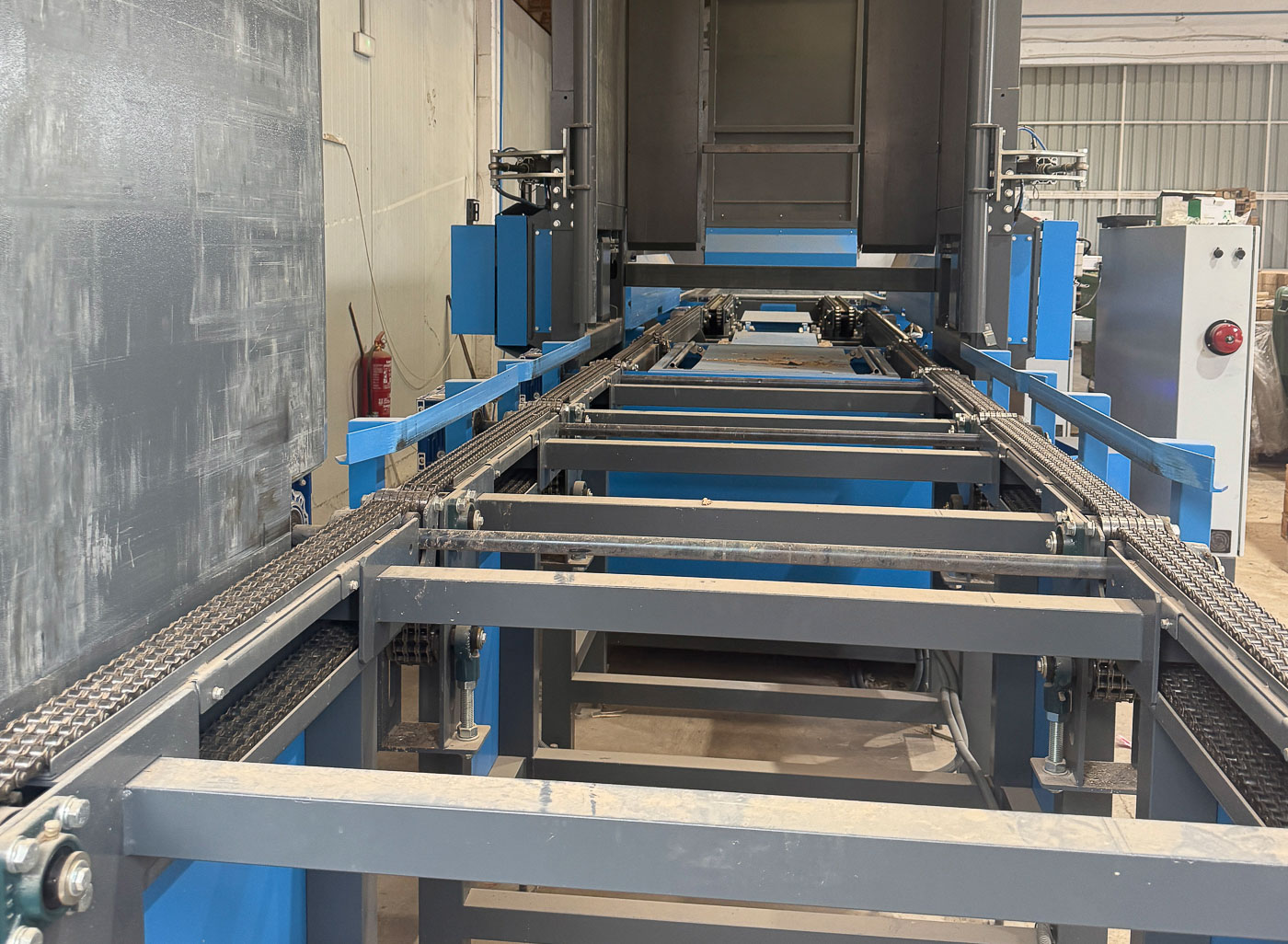
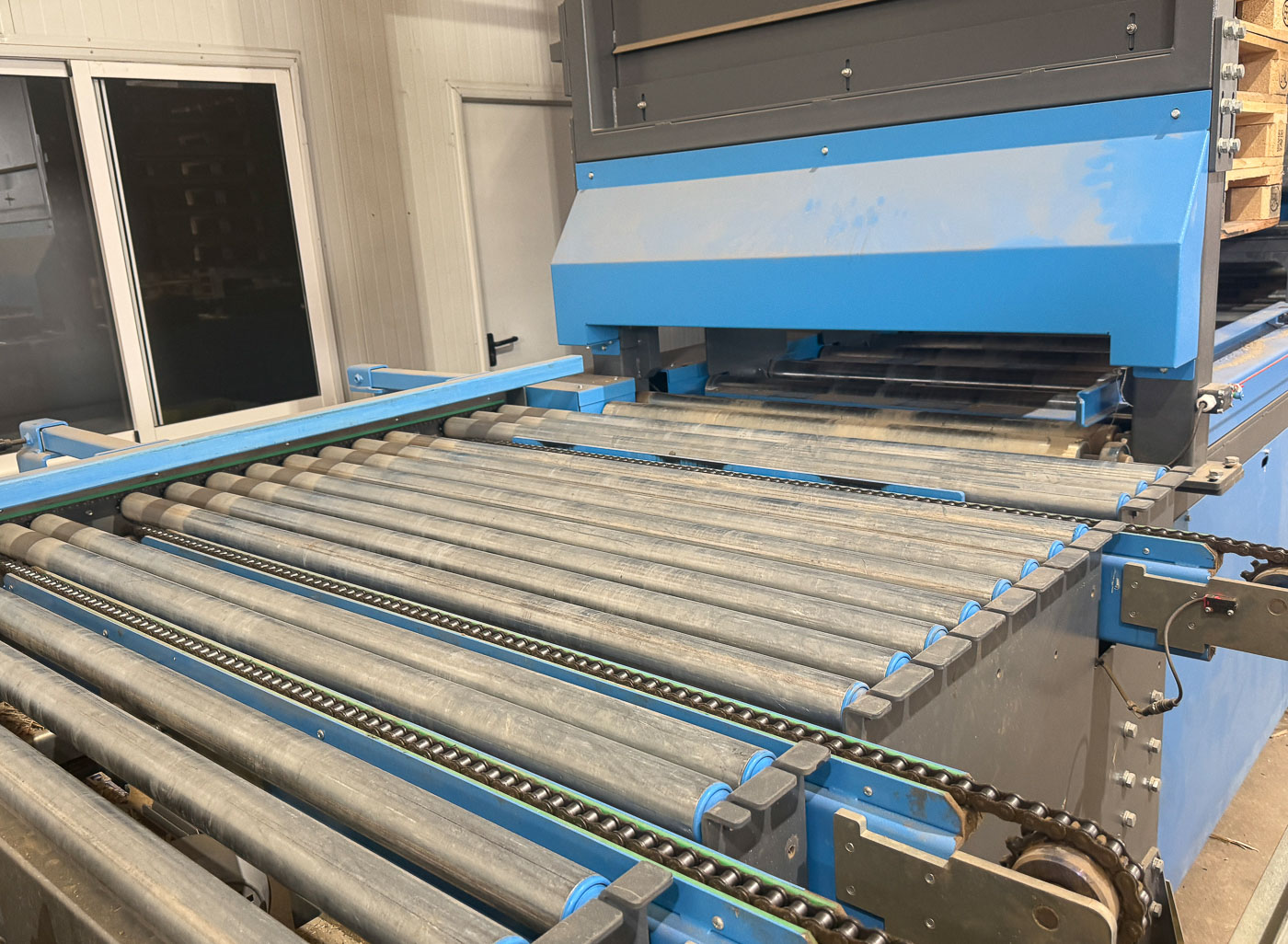
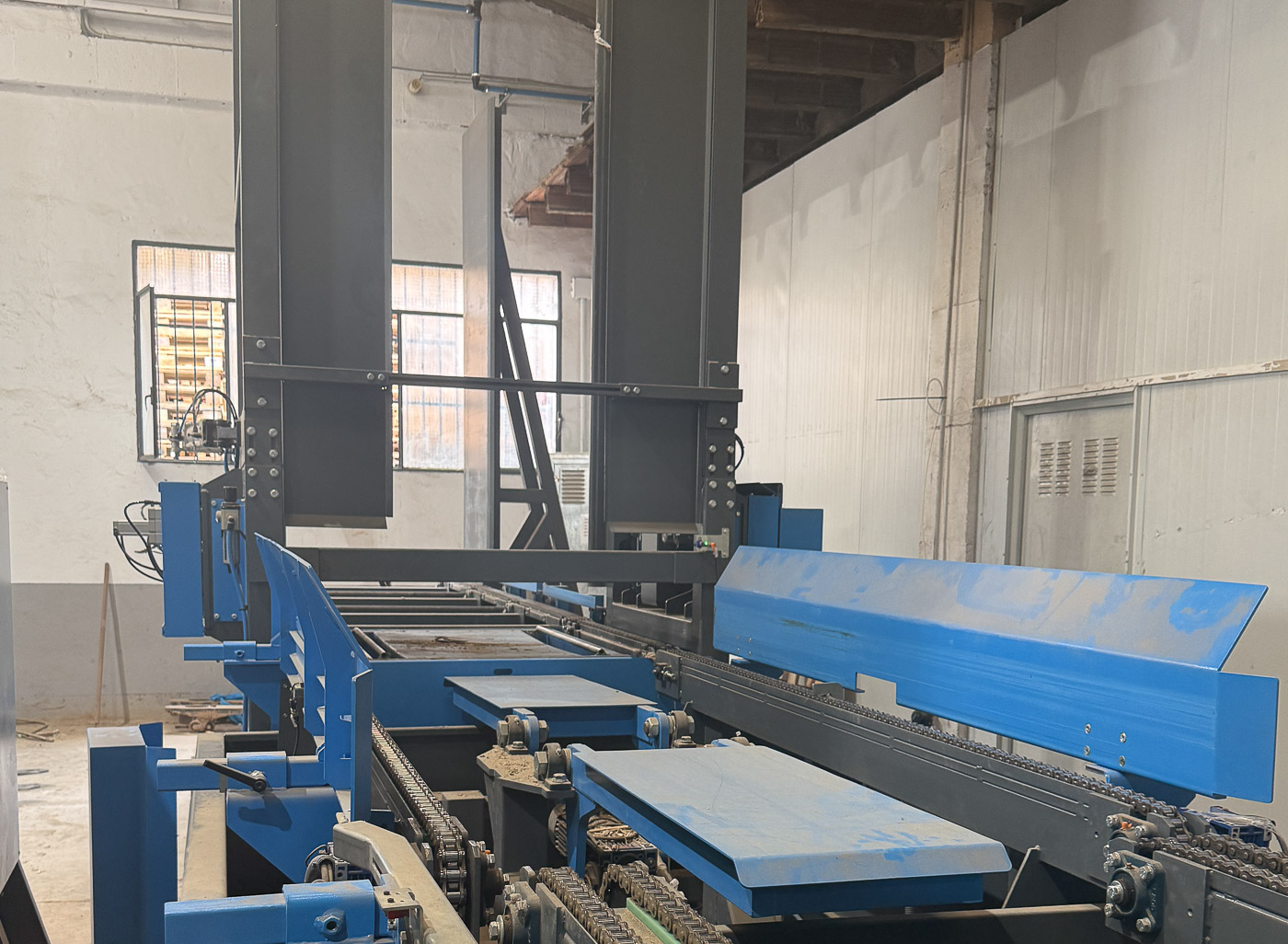
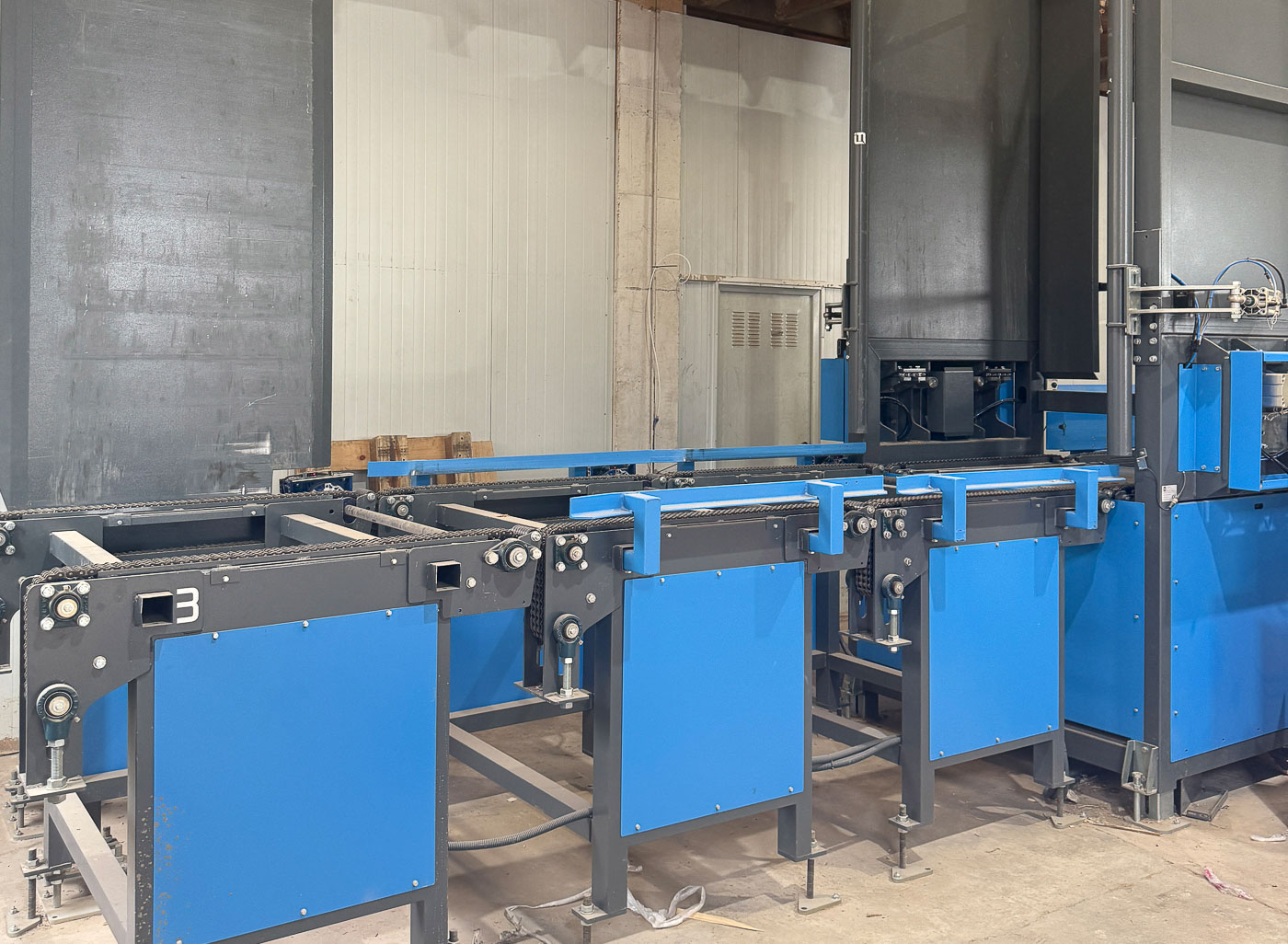
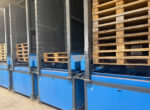
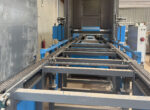
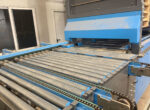
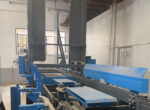
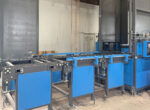

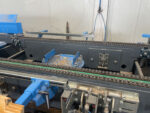
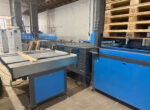
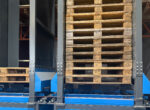
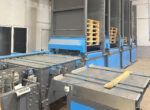
The pallet sorting line is a robust system for classifying used pallets quickly, consistently and with very little manual handling. Built for the used-pallet and pallet-pooling industry, this pallet sorting line lets operators sort pallets by any criteria they choose and routes damaged pallets to a repair station before returning them to the flow.
How the pallet sorting line works
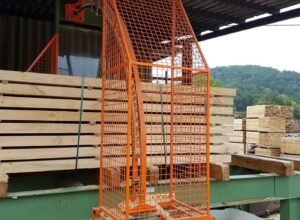
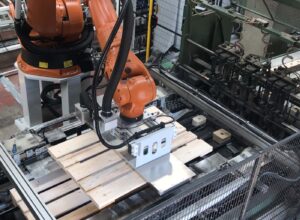
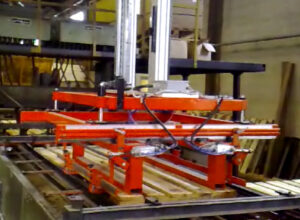
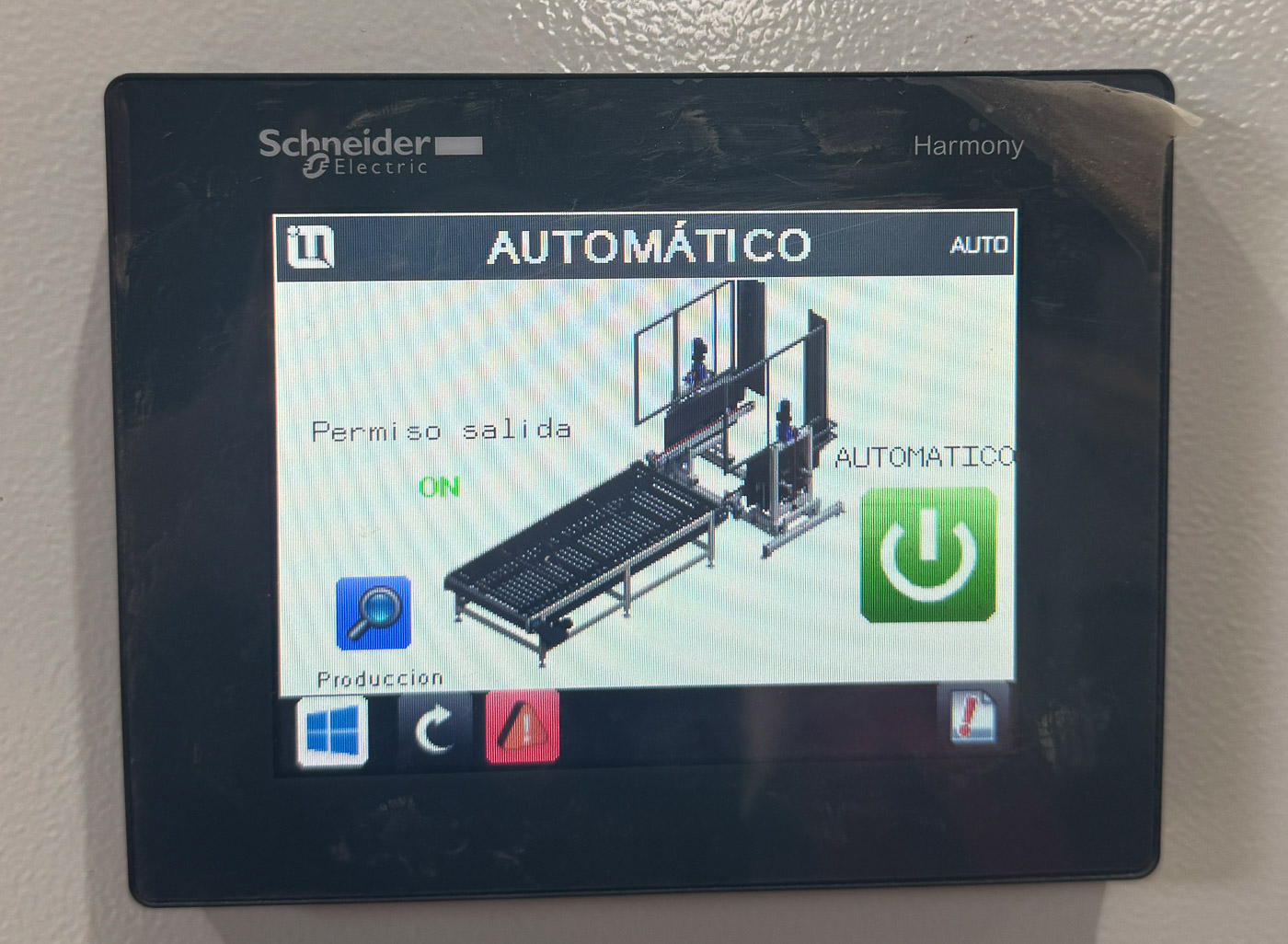
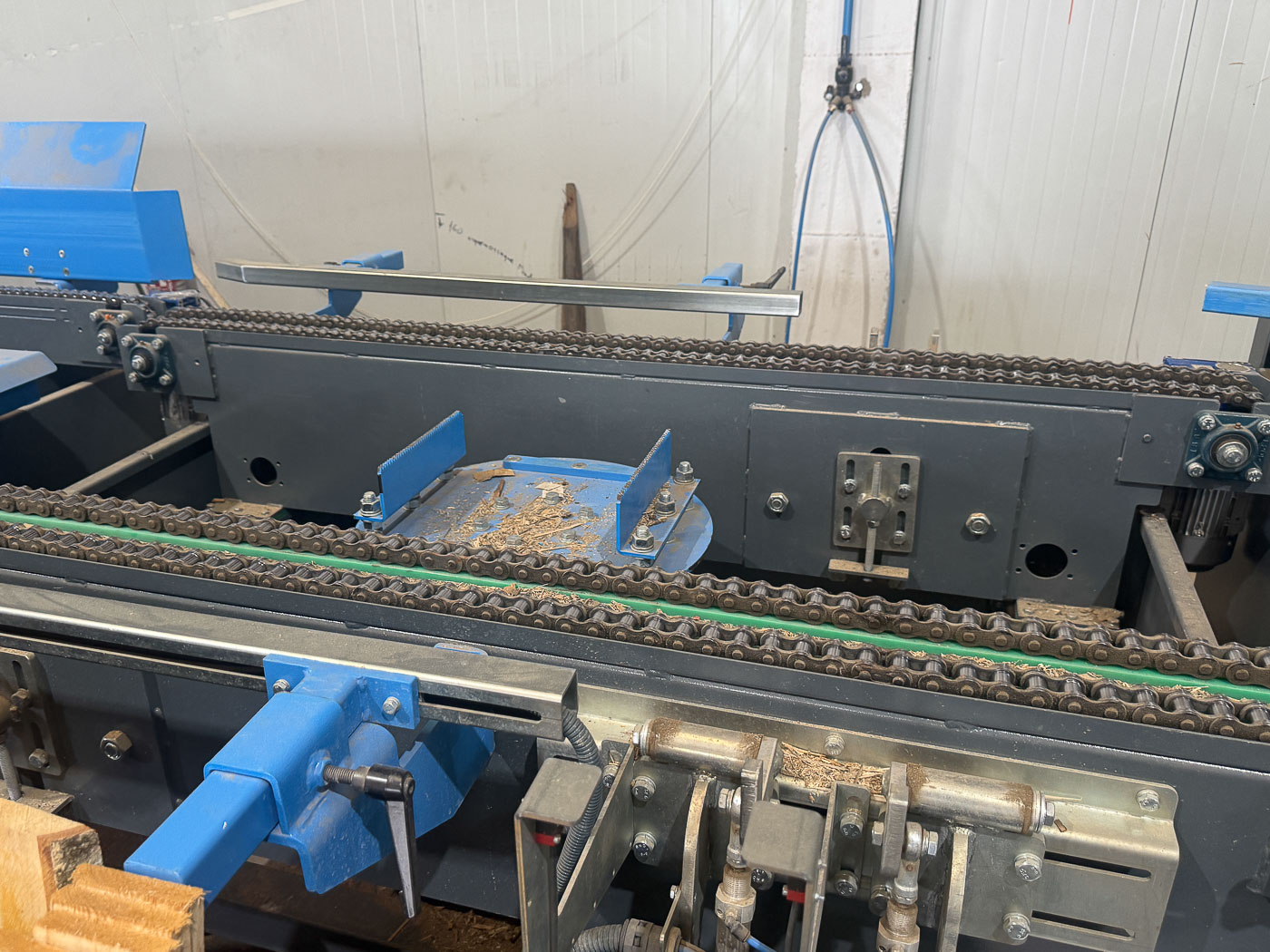
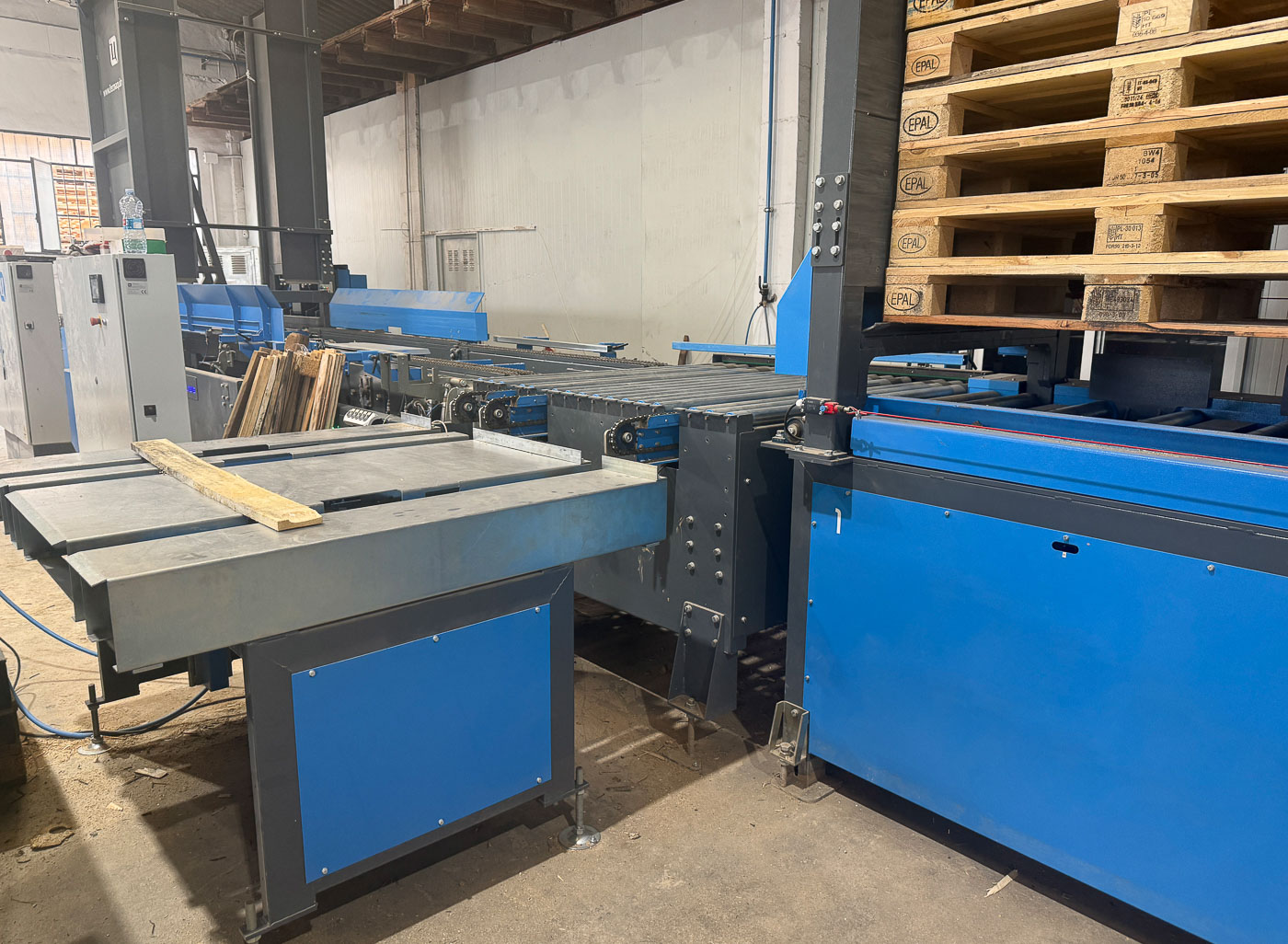
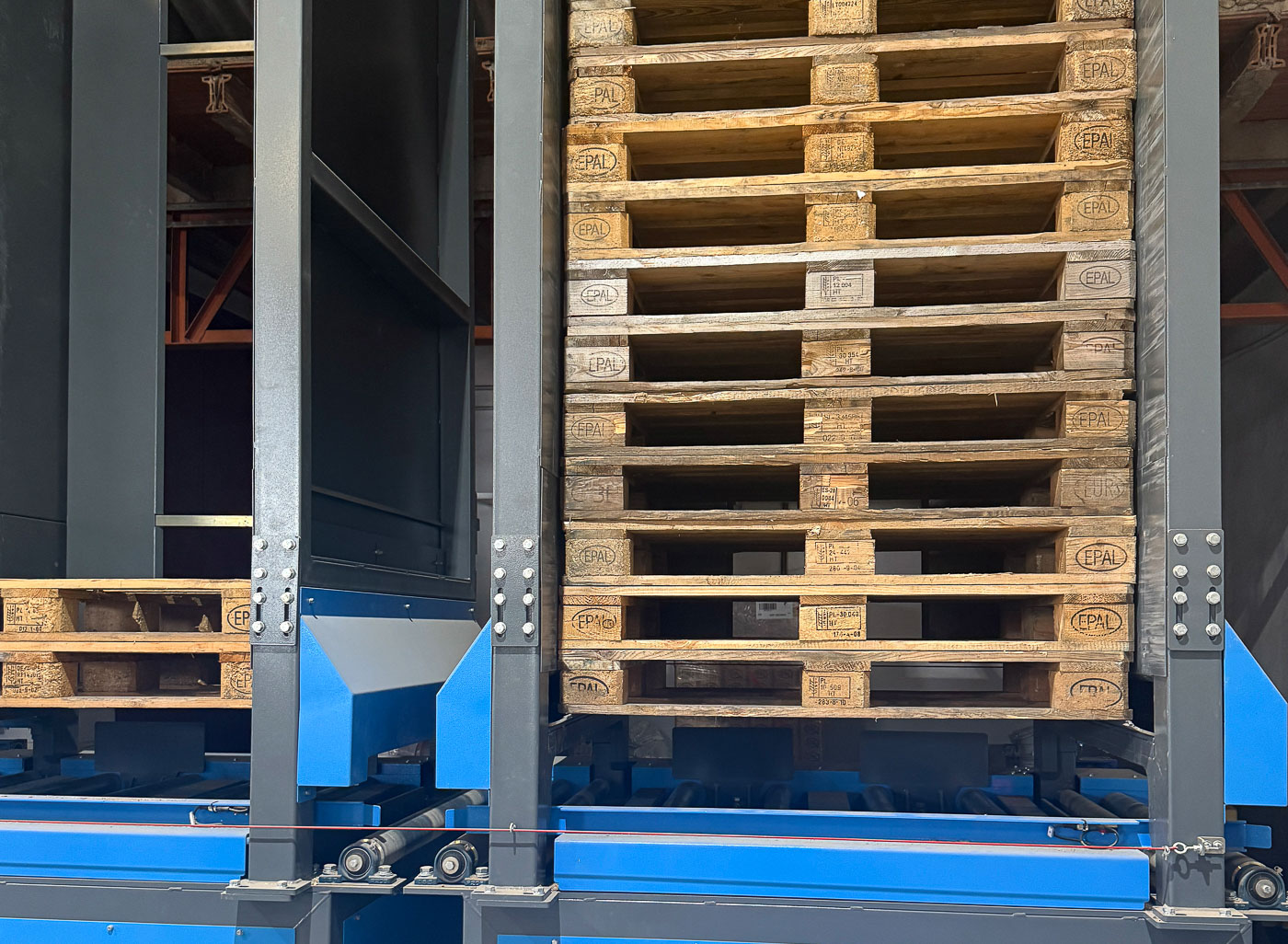
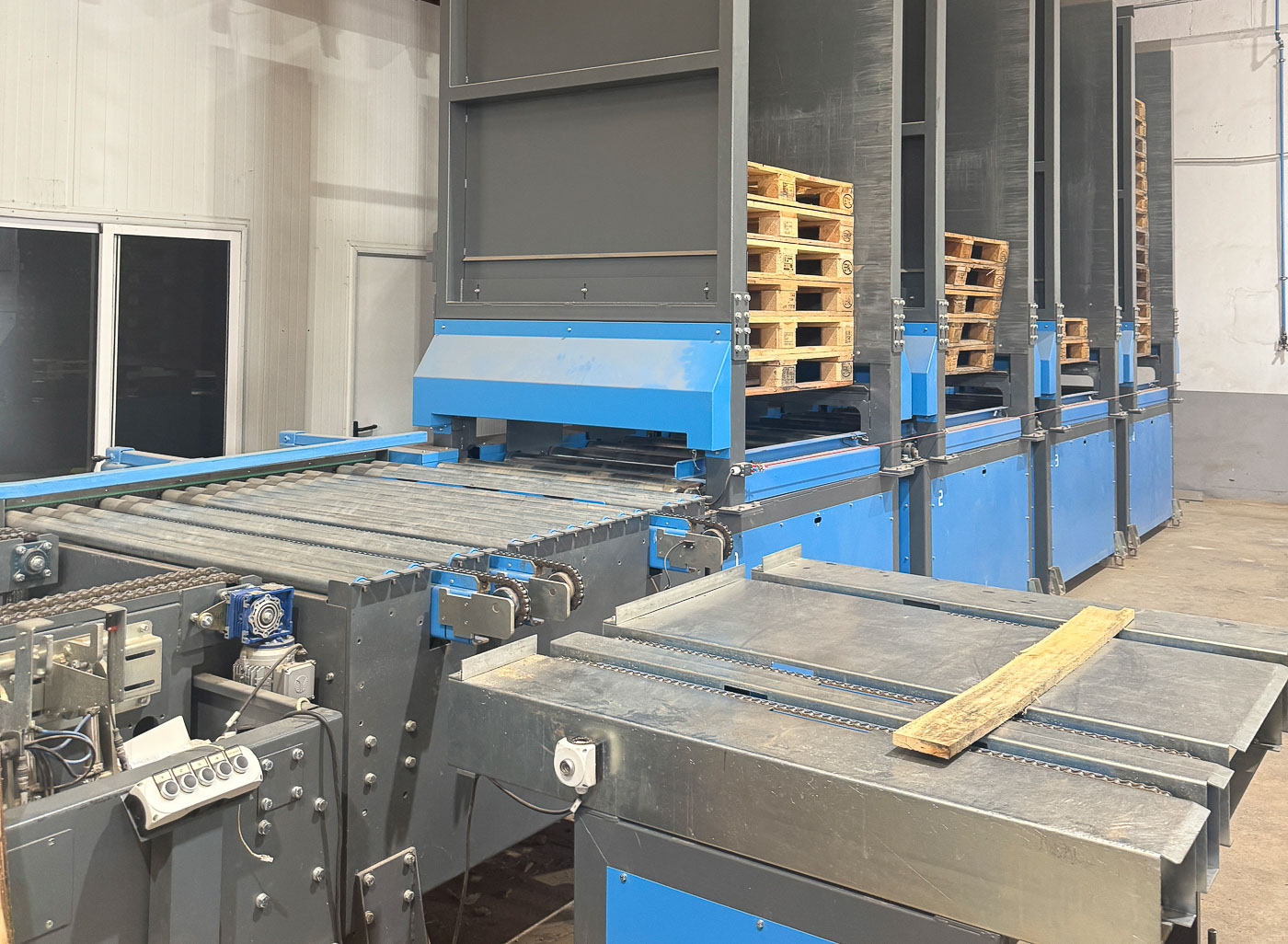
Stacks of used pallets enter at the feeding area, which is sized for three pallet stacks as standard and can be customized to your space. An unstacker separates the stack into individual pallets, a flipping system presents each pallet correctly, and a rotation system turns the pallet for a full 360° evaluation. The operator — guided by an easy-to-use screen — classifies each pallet, and the line stacks it in the appropriate output station.
Pallets that need repair are diverted automatically to a repair station and, once fixed, re-inserted into the pallet sorting line. This closed loop means a single line handles classification, repair routing and re-stacking without pallets leaving the system.
Key features
- Feeding area for 3 pallet stacks (customizable)
- Automatic pallet stack unstacker
- Pallet flipping system for correct presentation
- Rotation system for full 360° evaluation of each pallet
- Diverter with repair-station bypass and re-insertion
- Customizable number of stacking stations
- Easy-to-operate control screen and LED status indicator lights
Why automate used-pallet sorting
Sorting used pallets by hand is slow, physically demanding and inconsistent. A pallet sorting line standardises the process: every pallet gets the same 360° inspection, classification criteria are applied uniformly, and damaged pallets are captured rather than shipped by mistake. For pallet poolers and recyclers — such as those operating EPAL pallet pools — that means higher-quality outgoing stock, better use of labour and a clear, auditable sorting process.
The economics of used-pallet sorting
Used pallets are a high-volume, low-margin business, so the cost of sorting each pallet has a direct effect on profitability. Manual sorting is not only expensive in labour, it is also inconsistent: a tired operator near the end of a shift grades differently from a fresh one at the start. A pallet sorting line removes that variability. It processes a high, steady volume, applies the same standard to every pallet, and reduces the two costly errors of used-pallet handling — shipping a sub-grade pallet to a customer, and scrapping a pallet that could have been repaired. Over a year of operation those savings add up quickly against the cost of the line.
Configured to your operation
The number of stacking stations, the size of the feeding area and the sorting criteria are all configurable, so the pallet sorting line is matched to the volume and pallet mix of each customer. It works well alongside a pallet chemical shower station for treatment and a pallet nail detector for quality control, forming a complete used-pallet processing plant.
New supply
Global Wood Machines supplies the pallet sorting line as a new system, with worldwide freight, installation, commissioning and operator training across the USA, Canada, Australia, Europe and the Middle East.
Consistency and traceability
The information helps a pallet pooler plan stock, price grades correctly and identify when a particular supply source is sending poor pallets. Automation turns sorting from a cost centre into a managed, measurable process.
For a configuration and quotation matched to your throughput, contact our technical team.